AI Risk Warnings From a Google Whistleblower
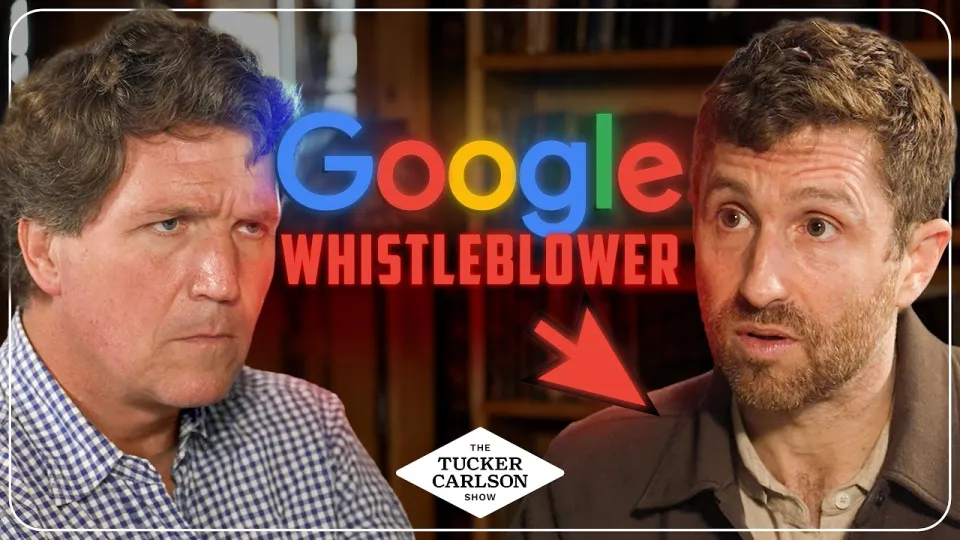
You can order the same kind of articles for your own video to boost it on YouTube and Google. Just message the Telegram bot @sat_sit_bot. It writes articles around your video, embeds the video and publishes them on popular niche websites (no ads). Free trial — 50 articles.
· based on the channel Tucker Carlson
AI risk, in the account of former Google design ethicist Tristan Harris, is not the story of a machine that breaks free of its creators. It is the story of systems that work exactly as designed, optimized for engagement and profit, and of the human incentives behind them. Harris, co-founder of the Center for Humane Technology, has spent more than a decade briefing heads of state, technology CEOs and members of the US Congress on how digital platforms reshape human attention and behavior.
His argument is uncomfortable for both camps in the debate. For doomers, he says the danger is not a sentient machine waking up; for enthusiasts, he says the incentives driving deployment are the problem, not the technology itself. The same logic that made social media destabilizing, he contends, is now being scaled into generative AI.
What the AI whistleblower warning actually says
Harris's central claim is that technology companies optimize for what captures attention, not for what serves users, and that this mismatch is now being built into AI products. In his telling, the question is not whether AI becomes conscious but who sets its objectives and what they are rewarded for.
- Engagement-based ranking rewards outrage and division, because those keep people on a platform longer.
- The same optimization logic moves into chatbots and recommendation systems as AI is layered onto existing products.
- Competitive pressure between companies, and between countries, compresses the time available for safety work.
- Regulation lags behind deployment, so the default outcome is whatever the market rewards fastest.
This is why Harris resists the framing of "rogue AI." A system that manipulates, flatters or misleads is not malfunctioning; it is doing what its training and incentives produced. The accountability, in his view, sits with the people who built and deployed it.
The Social Dilemma and the evidence base
Harris's warnings are not purely theoretical. He was a central figure in The Social Dilemma, the 2020 Netflix documentary that reached more than 100 million people in 190 countries across 30 languages and won two Emmy awards. The film argued that social platforms were reprogramming behavior at civilizational scale, and it made the case visible to a mass audience.
Before that, Harris studied persuasion at Stanford's Persuasive Technology Lab and worked as a design ethicist at Google, giving him an insider's view of how product decisions are made. He now co-hosts Your Undivided Attention, a podcast that traces the drivers behind the attention race and the destabilization of public life. The through-line from social media to AI is the business model: attention captured, behavior shaped, engagement monetized.
Hacking nuclear programs and other extreme scenarios
One of the most alarming threads in the discussion concerns whether AI could compromise critical infrastructure, including nuclear command and control systems. The scenario is not that a model decides to launch weapons, but that AI accelerates the discovery of software vulnerabilities and lowers the skill needed to exploit them.
- Critical systems often run on legacy software with long patch cycles.
- Automated vulnerability discovery compresses the time between finding a flaw and exploiting it.
- Attribution is hard, which weakens deterrence and raises the risk of miscalculation.
- Security teams on the defensive side face the same speed problem with fewer resources.
The broader point is about asymmetry: a tool that helps defenders also helps attackers, and the attacker only needs one success. Harris treats this as an argument for treating frontier AI as a security issue, not just a product category.
Transhumanism and the motives of tech oligarchs
The conversation also turns to the worldview of the people building frontier systems. Harris describes a strand of thinking among some technology leaders that treats human biology as a limitation to be overcome, with AI as the instrument. That vision, he argues, is a values choice presented as an inevitability.
When a small number of executives control the compute, the data and the deployment decisions, their assumptions about human nature become policy. Harris's prescription is transparency about those assumptions and democratic oversight of decisions that affect everyone. The concern is less about any single founder's beliefs than about the concentration of power to act on them.
Questions viewers keep raising
Audiences consistently push back on one point: if the products behave badly, that is a human decision, not a machine rebellion. Harris agrees, and that is why he focuses on incentives and accountability rather than on consciousness. The uncomfortable implication is that fixing AI means fixing the organizations and markets that shape it.
A second recurring doubt is whether the warnings are overblown. The answer depends on timescale. Social media's harms took years to become visible and are still contested; frontier AI is being deployed faster than that evidence can accumulate. A third theme is exhaustion with the pace of change and a sense that ordinary people have no say. Harris's response is that the race is a choice, and choices can be governed.
Where to find the primary sources
- Center for Humane Technology: https://www.humanetech.com/
- Redmond Salt (code TUCKER): https://redmond.com/tucker
- Preborn: https://preborn.com/TUCKER
- American Financing: http://www.AmericanFinancing.net/Tucker
- Ethos: https://ethos.com/TUCKER
Conclusion
Harris's warning is less about machines than about momentum: incentives that reward engagement over wellbeing, competitive pressure that shortens safety timelines, and a concentration of power that outpaces oversight. The Social Dilemma made the social media version of this argument mainstream; the AI version is being written now. Tucker Carlson's channel hosts the full conversation, including the nuclear-security scenarios and the transhumanist thread. Readers who want to go deeper can start at the Center for Humane Technology, where the organization publishes its research and calls to action.
Key takeaways
- Tristan Harris worked as a design ethicist at Google before co-founding the Center for Humane Technology.
- He was featured in the 2020 Netflix documentary The Social Dilemma, which reached over 100 million people in 190 countries and 30 languages.
- Harris argues that AI systems are not "rogue" but do exactly what their designers and business models reward.
- He briefs heads of state, technology CEOs and US Congress members on technology's effects on human behavior.
- Harris co-hosts the podcast Your Undivided Attention and leads the call for systemic change in tech.
Source: Whistleblower Issues Dire Warning: Rogue AI, Hacking Nuclear Programs & Tech Oligarchs’ True Motives · Markdown version
Questions & answers
Is AI actually "rogue" or doing what it was designed to do?
According to Harris, the latter. Systems optimized for engagement produce manipulative or extreme outputs because that is what their objectives and training reward. The accountability therefore rests with the people and companies that set those objectives, not with a machine acting on its own.
How serious is the risk that AI could be used against nuclear programs?
The concern is not a model launching weapons but AI accelerating the discovery of vulnerabilities in legacy systems and lowering the skill required to exploit them. That compresses response times and complicates attribution, which raises the risk of miscalculation between states.
Did social media really cause measurable harm, or is that still disputed?
The Social Dilemma, featuring Harris, reached over 100 million people and framed the debate, but the causal evidence remains contested among researchers. Harris's position is that the business model rewards outrage and division regardless of intent, and that AI extends the same logic.
What can an ordinary person do about these risks?
Harris's organization, the Center for Humane Technology, focuses on systemic change through policy, design standards and public pressure rather than individual willpower. Following its research and supporting oversight efforts are the practical steps it recommends.